

Most businesses can tell you what they spend on software in total. Far fewer can tell you exactly what that spend covers, who's using it, and when each contract renews. That gap is software sprawl, and it tends to grow quietly as a business grows.
The cost is often higher than leaders expect. According to Zylo’s 2026 SaaS Management Index, the average business wastes $19.8 million a year on unused software licenses.1 Read on to learn how software sprawl develops, why renewal season is the right time to address it, and how to decide which tools deserve to stay.
How Does Software Sprawl Happen?
Software sprawl isn't the result of one bad decision. It's the natural result of many reasonable ones made over time, by different people, for different needs.
Here are a few common patterns we see at C4:
- Departments Buying Tools: Marketing picks a project management app. Sales adds a proposal tool. Operations finds something for scheduling. Each purchase solves a real problem, but nobody sees the full list.
- Licenses Outlasting Their Purpose: Seats stay assigned after people change roles or leave. Premium tiers stay active after the project that needed them wraps up.
- Renewal Dates Multiplying: Add-ons purchased mid-term to lock in good pricing often end up on their own renewal schedule. A few rounds of that, and one provider relationship can have several contracts renewing at different times.
- Split Ownership: Microsoft licensing sits with IT, Google Workspace with another team, AWS with whoever set up the first workload, and business applications with the departments that use them.
None of this means anyone dropped the ball. It just means the full picture lives in too many places.
Why Now Is the Right Time for a Software License Audit
Budget planning season is the best time to look at software spend, for one simple reason: renewals. Many software contracts auto-renew, and pricing tends to go up at renewal. Microsoft's 2026 price increase, for example, hits each customer at their next renewal date, not all at once. We covered what changed in our post on Microsoft licensing in 2026.
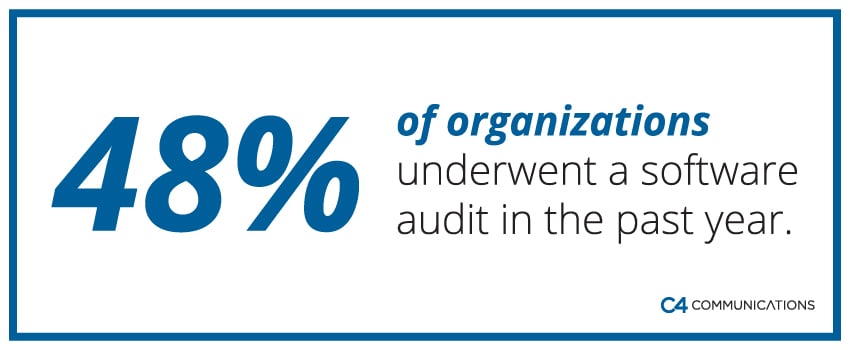
Audits are also more common than many businesses assume. Flexera’s 2026 State of IT Asset Management report found that 48% of organizations underwent a software audit in the past year.2 Reviewing your software before next year’s budget is set gives you time to cut, consolidate, or renegotiate before another year of spend is locked in.
SaaS Spend Management: A Simple Framework
You don't need a complicated process to figure out what's earning its place. Ask these three questions about each tool:
1. Is It Still Being Used?
Look at actual usage data, not the seat count. Most platforms show active users and login activity. If half the licenses haven't been used in 90 days, start there.
2. Does It Overlap With Something Else?
Many businesses pay for two or three tools that do the same job – like Microsoft 365 and Google Workspace, which both include video meetings, file storage, and chat. If a standalone tool duplicates what's already in your core platform, it may not need to stay.
3. Does the Original Need Still Exist?
Some tools were bought for a specific project, team, or process that has since changed. If the reason for the purchase is gone, the tool probably should be too.
Get Your Software Spend Under Control With C4
Software sprawl adds up through reasonable purchases until the total cost is hard to see. Luckily, building an inventory and asking the right questions can show you where the waste is and what you need to cut first.
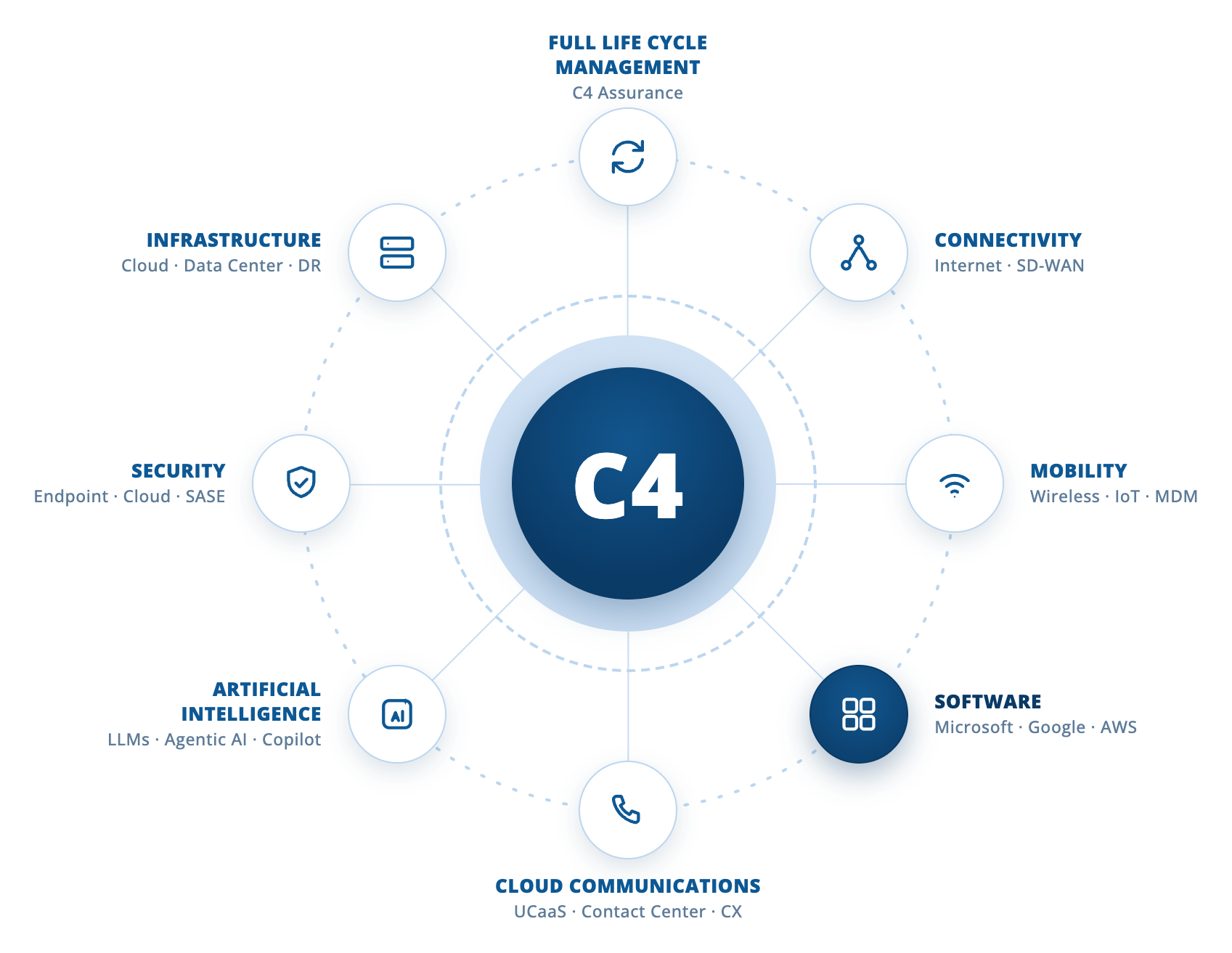
Struggling to get your software spend under control? C4 Communications can help. Our software experts take inventory across your entire environment – Microsoft, Google, AWS, and business applications – so you get the full picture in one place. We also stay involved after the audit through C4 Assurance, bringing structure to how you evaluate, purchase, and renew your software.
If you're putting together your 2027 budget, now is a good time to look. Let's take inventory together.
Sources: