

Most business leaders assume their telecom and IT bills are just a cost of doing business – fixed, predictable, and not worth questioning. But the reality is that for many SMBs and growing enterprises, those invoices are quietly inflated by charges that should never have made it to the bottom line.
In this blog, we’ll explore common culprits of IT overspend and share telecom cost reduction tips, so you can pay for what you actually use.
Where Is Your Hidden IT Overspend?
IT overspend rarely comes from one big, obvious mistake. It accumulates in layers, such as:
- Connectivity contracts that auto-renew at rates that made sense three years ago but are now well above market.
- Voice lines sitting idle because a department was restructured, but nobody updated the account.
- Security tools that overlap because different teams purchased different solutions without coordination.
- Cloud licenses that were provisioned for a full workforce but were never adjusted after a downsizing.
While each line item may seem small, together they can represent thousands of dollars per month in pure waste – and most organizations don't realize it until someone takes a hard look.
Telecom Cost Reduction: Where To Look First
The hidden costs eating into your budget fall into a few predictable categories. Understanding these patterns can help you know where to focus your attention first.
1. Vendor Sprawl
When businesses grow quickly, they tend to add technology reactively. You grab one tool for this problem, another for that one, without a clear strategy for how it all fits together. Over time, you end up locked into contracts with providers who have little incentive to right-size your services.
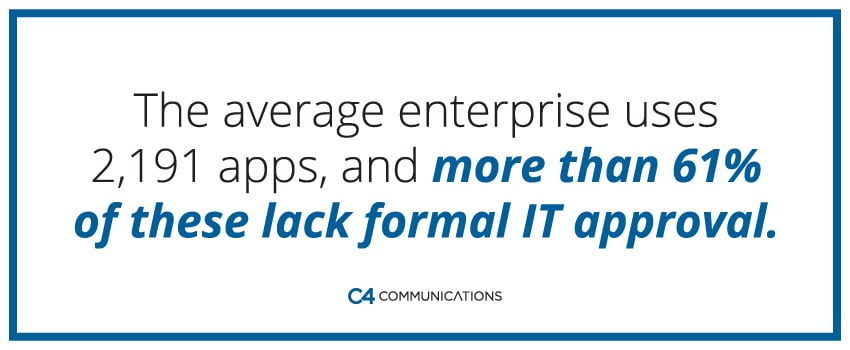
Shadow IT makes this worse. The average large enterprise is operating 2,191 applications, and more than 61% of these lack formal IT approval.1 That's a sprawling, unmanaged ecosystem where hidden costs thrive.
2. Stagnant Providers
There's a big difference between a provider that sold you a solution and a partner that's invested in whether that solution still fits. Some warning signs that your current provider may not be aligned with where your business is headed:
- Your account rep only calls at renewal time
- Your pricing hasn't been benchmarked against the market in over 18 months
- You've added headcount and locations without anyone recommending an updated plan
Technology needs change. Providers that treat your account as a set-it-and-forget-it revenue stream aren't serving your growth strategy – they're just protecting their contract.

3. Unmanaged Licensing
Unmanaged licensing is one of the most common drivers of IT overspend. A 2026 report revealed that organizations use only 54% of their licenses on average, resulting in an average of $19.8M in waste annually.2
Whether it's UCaaS seats that haven't been audited in two years or SD-WAN services bundled with capabilities you don't need, these costs are easy to overlook and hard to reclaim without outside help.
C4 Communications: Your Tech Budget Optimization Partner
C4 Communications has spent more than 20 years helping businesses across Connecticut and nationwide get to the bottom of what they're actually paying for. As an independent technology solutions consultant – not a carrier, not a reseller with a quota – C4 can take an unbiased look at your current stack, benchmark your rates against what's available in the market today, and recommend right-fit solutions from a portfolio of 100+ providers.
Tech budget optimization starts with visibility. C4's process begins with a cost analysis to identify where you're over-contracted, under-served, or simply paying for something for which better options are available. From there, our solution consultants negotiate on your behalf and manage the full lifecycle of your solutions, so you're not left to navigate provider relationships on your own.
Book a consult with C4 Communications and find out what your current setup is actually costing you.
Sources: