

Most businesses don't discover gaps in their communication infrastructure during a planning meeting. They find them when a video call drops during a client presentation, when a remote employee can't access a critical application, or when an outage takes down the phone system and there's no fallback. What they rarely recognize is that much of the problem stems from having too many tools.
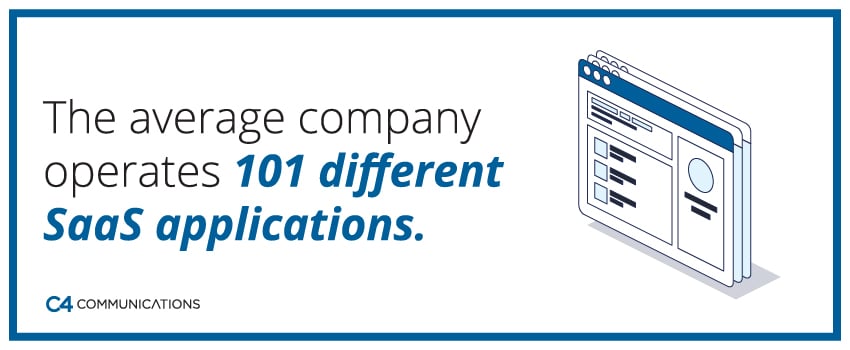
The average company now operates 101 different SaaS applications, and employees lose about 44 hours per year to tool fatigue.1 So, how much is this costing your business? Luckily, these issues are identifiable before they become incidents, but you have to know where to look for the gaps in your tech stack.
What Are the Most Common Gaps in Business Communication Tools?
Technology stacks grow organically. A phone system gets added here, a cloud application there, a new collaboration tool when the last one stopped meeting everyone's needs. Over time, the result is a fragmented environment where no single person – and no single platform – has full visibility into how everything is performing.
The blind spots that emerge from that fragmentation tend to follow predictable patterns:
- No Centralized Visibility: IT teams are managing separate dashboards for voice, connectivity, and cloud applications with no unified view of performance or availability.
- Platform Overlap: Multiple tools doing similar things in some areas, while critical functions – like call recording, failover, or compliance archiving – fall through the cracks entirely.
- Poor User Experience: Employees work around poorly performing tools rather than reporting them, and leadership has no data on how communication friction affects productivity.
- On-Prem Connectivity: Networks built for on-premises traffic are now carrying cloud-first workloads they were never sized or architected to support.
According to a 2025 report, 86% of IT leaders say that disparate tools create financial strain and security risks.2 Clearly, organizations aren’t short on tools. They are drowning in them.
How UCaaS and Cloud Optimization Fill the Gaps
IT infrastructure failures often stem from having too many disconnected systems. Here’s how consolidating voice, connectivity, and cloud services into integrated solutions can help you eliminate common tech gaps:
Unified Communications
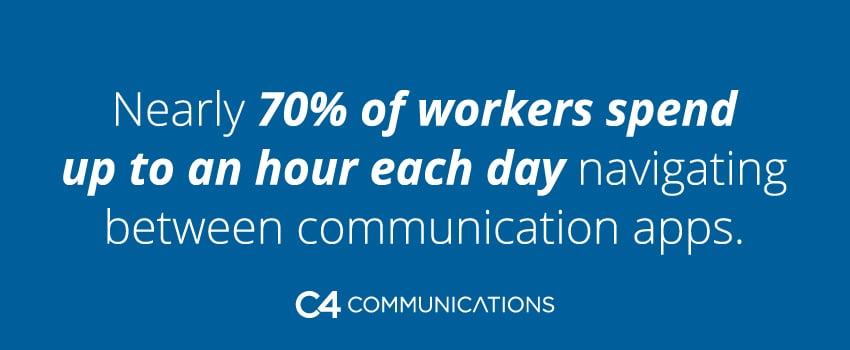
Fragmented platforms are the root cause of most technology blind spots, with nearly 70% of workers spending up to an hour each day navigating between communication apps alone.3 A UCaaS solution consolidates voice, messaging, video, and collaboration into a single environment, so your IT teams have one platform to manage and monitor, and employees get a consistent experience regardless of where they're working.
Cloud Backup and Redundancy
Most organizations have a primary path for their critical applications. Fewer have a tested, automatic fallback for when that path fails. Cloud-based backup and redundancy – built into your architecture from the start rather than bolted on after an outage – is one of the fastest ways to close a gap that often goes unaddressed until it's too late.
SD-WAN and Intelligent Connectivity
SD-WAN addresses the connectivity layer that most communication stacks depend on. Intelligent traffic routing ensures your highest-priority applications get the bandwidth and path quality they need – and that a single connection issue doesn't take down voice, video, and cloud access simultaneously.
How To Assess Your Tech Stack Gaps
You don't need a full infrastructure audit to get a meaningful picture of where your stack stands. Start by asking these questions:
- Can you see it? If you can't monitor the performance of your voice, connectivity, and cloud platforms from a single view, you're managing reactively.
- Are your users working around it? Shadow IT – employees using personal tools because the provided ones don't work well enough – is a reliable signal that user experience gaps exist.
- Was it designed for how you work now? Infrastructure built for a pre-cloud, pre-hybrid workforce often underperforms in ways that are hard to attribute to any single cause.
Organizations that take a structured approach to consolidating their IT infrastructure recover millions in wasted spending while simultaneously improving reliability and security. The process starts with clarity about what you have and an honest assessment of what is actually delivering value.
Build a More Connected Architecture With C4
At C4, we start with the environment you have – not the one a vendor wants to sell you. Our solution consultants assess your current voice, connectivity, and cloud architecture to identify gaps, platform underperformance, and where the right solution would have the most impact.
We work independently across a portfolio of 100+ providers, so our recommendations are based on fit – not on what's most convenient for a vendor relationship. And because we stay with you through implementation and beyond, we're accountable for whether it actually works.
If you're not sure where your tech stack gaps are, let's find out together.
Sources:
- https://speakwiseapp.com/blog/workplace-technology-overload-statistics
- https://www.itpro.com/software/software-sprawl-is-getting-out-of-control-86-percent-of-it-leaders-say-disparate-tools-are-creating-financial-strain-and-security-risks-but-consolidation-is-now-a-high-priority
https://www.iru.com/blog/tool-sprawl